What Is Nougat Made Of? Here’s What’s Really Inside
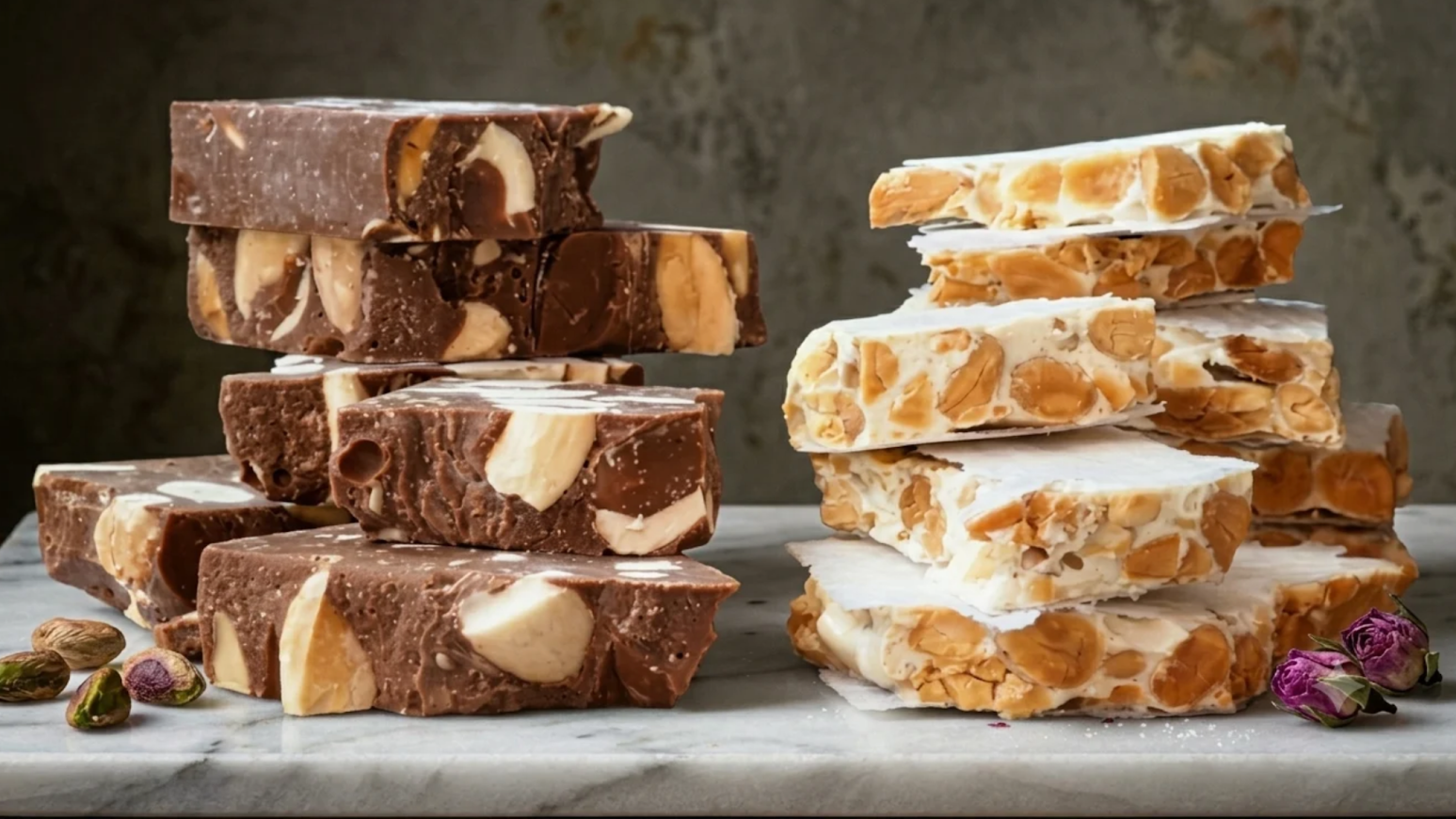
Nougat is a sweet confection traditionally made from sugar or honey, whipped egg whites, and nuts such as almonds or pistachios. Some recipes also include glucose syrup, vanilla, or candied fruit. Depending on the ingredients and preparation method, nougat can be soft and chewy, firm, or crunchy.
You may have tasted nougat on its own or inside a chocolate bar. However, traditional nougat and commercial candy-bar fillings can have very different ingredients. Understanding what is nougat made of helps you identify these differences, learn how nougat is prepared, and choose a variety that suits your taste and dietary needs.
What Is Nougat Made Of? Main Ingredients
Traditional white nougat is made from sugar or honey, whipped egg whites, and nuts. Other ingredients, such as glucose syrup and vanilla, may be added to improve its texture and flavor.
| Ingredient | Purpose |
| Sugar | Provides sweetness and structure |
| Honey | Adds sweetness and a distinctive aroma |
| Egg whites | Create a light, airy texture |
| Almonds and other nuts | Provide flavor and crunch |
| Glucose syrup | Helps control sugar crystallization |
| Vanilla and candied fruit | Add flavor and variety |
Sugar and Honey
Sugar forms the sweet base of many nougat recipes, while honey contributes a distinctive aroma and flavor. The proportions of these sweeteners and the temperature at which they are cooked affect the final consistency, from soft and chewy to firm.
Egg Whites
Whipped egg whites help give traditional white nougat its light, airy structure. They trap air and help stabilize the mixture as the hot sugar syrup is incorporated. However, not every confection called nougat contains egg whites. Some chocolate-based and caramelized varieties use different ingredients and preparation methods.
Almonds and Other Nuts
Almonds are among the most common ingredients in traditional nougat. Pistachios, hazelnuts, and walnuts may also be used, depending on the recipe. Whole or chopped nuts add a roasted flavor and contrast with the sweet base.
Glucose Syrup and Other Ingredients
Glucose syrup helps limit unwanted sugar crystallization, giving nougat a smoother texture. Vanilla, candied fruit, and other flavorings may also be included. Commercial products can contain milk ingredients, vegetable fats, cocoa, or other additives, so check the ingredient label for the exact composition.
How Is Nougat Made? Step-by-Step Process
Knowing what is nougat made of helps explain its texture and flavor. Look below to learn how it is prepared step by step.
Step 1: Prepare the Sugar Syrup
Sugar, water, and sometimes glucose syrup are heated in a saucepan. Honey may be heated separately or combined with the other sweeteners, depending on the recipe. A candy thermometer helps determine when the syrup reaches the required temperature.
Step 2: Whip the Egg Whites
Egg whites are beaten until they form a stable foam. This creates the airy base that distinguishes many traditional white nougat recipes from harder, caramel-based varieties.
Step 3: Combine the Syrup and Egg Whites
The hot syrup is gradually added to the whipped egg whites while mixing continues. The mixture becomes thicker and glossier as the ingredients combine. Hot sugar syrup can cause serious burns, so this step requires careful handling.
Step 4: Add Nuts and Flavorings
Roasted almonds, pistachios, or other nuts are folded into the mixture. Vanilla and candied fruit may also be added, depending on the desired flavor and texture.
Step 5: Shape and Let the Nougat Set
The mixture is transferred to a prepared tray or mold and spread into an even layer. Edible wafer paper may be used to prevent sticking. After the nougat cools and sets, it can be cut into bars or smaller pieces.
This method applies mainly to traditional white nougat. Brown nougat and Viennese-style nougat use different ingredients and techniques, so their preparation can vary considerably.
What Are the Different Types of Nougat?
Nougat is not a single recipe. Different confectionery traditions use different sweeteners, nuts, and preparation methods to produce distinct flavors and textures.
1. White Nougat
White nougat is commonly made with sugar or honey, whipped egg whites, and whole nuts. It is often soft and chewy, although some recipes produce a firmer consistency.
Italian torrone and certain Spanish turrón varieties are well-known examples of traditional nougat-style sweets. Their ingredients and textures vary according to the regional recipe, particularly the proportions of honey, sugar, and almonds.
2. Brown or Dark Nougat
Brown or dark nougat often gets its color and flavor from caramelized sugar or roasted nuts. Some varieties contain egg whites, while others do not. Depending on the recipe, the result may be firm, crunchy, or similar to nut brittle.
The term can describe different regional confections, so it does not refer to one standardized recipe.
3. Viennese or German Nougat
Viennese or German-style nougat is generally made with ground hazelnuts, sugar, cocoa or chocolate, and fat. It has a smooth, rich consistency rather than the airy, chewy texture associated with traditional white nougat.
This variety is commonly used in pralines, chocolate fillings, and other confectionery products. Its hazelnut-and-chocolate base makes it quite different from honey-based nougat.
4. Italian Torrone and Spanish Turrón
Italian torrone and Spanish turrón are traditional sweets closely associated with nougat. Torrone is commonly made with honey or sugar, egg whites, and nuts, while Spanish turrón includes varieties made with whole almonds and others prepared with ground almonds and honey. Both can have different textures depending on the recipe. Hard varieties offer a firm crunch, while softer versions have a more yielding consistency.
What Is the Nougat in Candy Bars Made Of?
Nougat used in commercial candy bars can differ considerably from traditional European nougat. Depending on the product, its ingredients may include sugar, corn syrup, egg whites or other aerating ingredients, milk ingredients, vegetable fats, and flavorings.
Manufacturers formulate these fillings to maintain a consistent texture and complement the other ingredients in a candy bar. As a result, commercial nougat may be softer, sweeter, or more uniform than traditional nougat sold in blocks.
For example, a Snickers bar combines nougat with caramel and peanuts under a milk chocolate coating. This combination differs from traditional honey-and-almond nougat, even though both products use the same name for a component. The exact ingredients depend on the brand and market. Check the packaging if you need to identify particular ingredients, avoid allergens, or determine whether a product meets your dietary requirements.
What Does Nougat Taste Like?
Nougat generally tastes sweet, but its flavor depends on the ingredients used. Honey-based varieties may have a floral aroma, while roasted almonds and pistachios contribute a nutty taste. Vanilla and candied fruit add further flavor.
Texture also affects the eating experience. White nougat is often chewy and slightly airy, with whole nuts providing a firm bite. Dark varieties may be harder and crunchier, while chocolate-and-hazelnut nougat tends to be smooth and rich. Commercial candy-bar nougat can taste sweeter and softer, especially when combined with caramel and chocolate. Someone familiar only with candy-bar fillings may find traditional honey-and-nut nougat noticeably different.
Is Nougat Vegetarian, Vegan, or Gluten-Free?
Nougat’s suitability depends on its ingredients and how it is manufactured.
- Vegetarian: Traditional nougat containing egg whites is generally suitable for lacto-ovo vegetarians. However, individual products should be checked for other ingredients.
- Vegan: Traditional white nougat is not vegan when it contains egg whites or honey. Vegan alternatives use plant-based sweeteners and substitutes.
- Gluten-free: Many traditional nougat recipes do not require gluten-containing ingredients. However, wafer sheets, additional ingredients, and cross-contact during manufacturing can affect suitability.
Nougat commonly contains nuts and may contain eggs, milk, or soy, depending on the recipe. If you have a food allergy or coeliac disease, read the ingredient and allergen statements rather than relying on the product name alone.
Conclusion
Traditional nougat is generally made from sugar or honey, nuts, and, in many recipes, whipped egg whites. Ingredients such as glucose syrup, vanilla, and candied fruit may be added to influence its flavor and consistency. The preparation method determines whether the finished confection is soft and chewy, firm and crunchy, or smooth and rich.
Knowing what is nougat made of also helps you distinguish traditional nougat from commercial candy-bar fillings. Although they share a name, their ingredients and textures can differ substantially. When buying nougat, check the ingredient list if you have dietary restrictions or food allergies. If you plan to make it at home, select a recipe for the specific variety you want and follow its temperature instructions carefully.
Frequently Asked Questions (FAQs)
Q1. Is nougat made of marshmallow?
No. Traditional nougat contains sugar or honey, nuts, and whipped egg whites, while marshmallows typically contain sugar, water, and gelatin or a plant-based alternative.
Q2. Does all nougat contain nuts?
No. Some nougat varieties are made without nuts, although almonds and pistachios are common ingredients. Check the label for allergens before eating.
Q3. Does nougat contain raw egg?
Some traditional nougat recipes use whipped egg whites combined with hot sugar syrup. Cooking methods vary, so check the product label if you need to avoid raw or undercooked eggs.
Q4. Is nougat the same as the filling in a Snickers bar?
No. Snickers contains nougat combined with caramel, peanuts, and milk chocolate. Traditional white nougat typically contains sugar or honey, egg whites, and nuts.
5. Can you make nougat without egg whites?
Yes. Egg-free nougat-style sweets can use chocolate, ground nuts, caramelized sugar, or plant-based alternatives. Their texture may differ from traditional white nougat.