
Best Reusable Water Bottles: 6 Top Picks for Daily Use
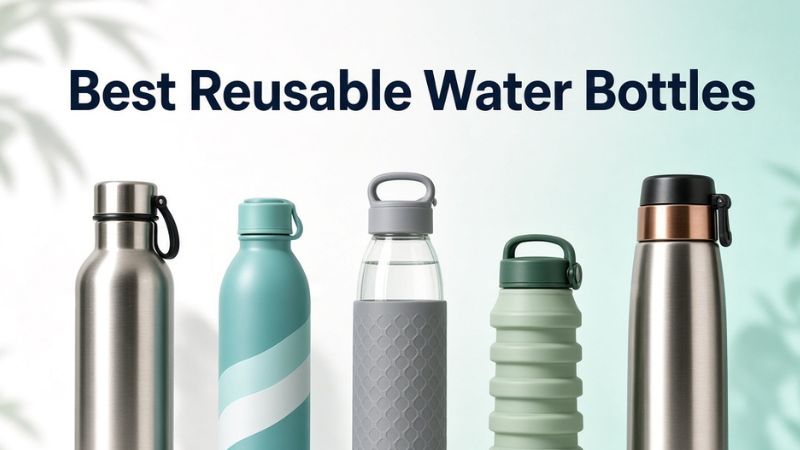
Choosing a reusable water bottle involves more than picking an attractive design. You need something that fits your bag, is easy to clean, and suits your daily routine. If you spend long hours at work, insulation may be important. For hiking or commuting, a lightweight bottle with a secure lid may be more practical.
The best reusable water bottles balance durability, convenience, hygiene, and price. Stainless steel bottles are popular for insulation, plastic models are often lighter and more affordable, and glass bottles appeal to people who prefer a neutral taste. The right option depends on how you plan to use it.
This guide compares six popular water bottles, explains their advantages and limitations, and covers the features worth checking before you buy. You will also find practical advice on bottle safety, cleaning, and choosing the right capacity.
Best Reusable Water Bottles: Quick Comparison
Here is a quick look at six options worth comparing before making a purchase.
- Hydro Flask Standard Mouth: An insulated stainless steel bottle for everyday use.
- Owala FreeSip: A bottle with two drinking options: a built-in straw and a spout.
- Nalgene Wide Mouth: A lightweight plastic bottle suited to outdoor activities.
- YETI Rambler: An insulated stainless steel option for work and travel.
- Stanley IceFlow: A bottle with convenient drinking-lid options and insulated designs.
- Milton Thermosteel: An option for Indian buyers comparing insulated bottles across different budgets.
Features, capacities, and prices vary by model. Check the specifications of the exact version you intend to buy, including its lid, weight, cleaning instructions, and warranty.
1. Hydro Flask Standard Mouth
The Hydro Flask Standard Mouth is a stainless steel bottle designed for people who want to keep drinks cold or hot for extended periods. Its double-wall vacuum insulation helps maintain temperature, making it suitable for office use, commuting, and travel.
The standard-mouth opening provides a familiar drinking experience, while compatible lid options allow you to choose a design that suits your needs. However, insulated bottles generally cost more and weigh more than basic plastic alternatives.
Pros
- Vacuum insulation for hot and cold drinks.
- Durable stainless steel construction.
- Suitable for daily use and travel.
Cons
- Higher price than many basic bottles.
- Heavier than most lightweight plastic options.
Best for: Office workers, commuters, and people who want an insulated everyday bottle.
2. Owala FreeSip
The Owala FreeSip stands out for its dual drinking design. You can sip through the built-in straw or tilt the bottle to drink from its spout. This makes it convenient for people who prefer different drinking styles throughout the day.
Selected models feature insulated stainless steel construction and a locking lid. These features make the bottle worth considering for school, commuting, and office use. However, the straw, seals, and other lid components require regular cleaning.
Check the capacity, washing instructions, and leak-resistance specifications of the model you choose.
Pros
- Two drinking options in one lid.
- Insulated options for cold water.
- Convenient design for everyday hydration.
Cons
- Lid components need thorough cleaning.
- Features vary between models.
Best for: Students, commuters, and people who prefer straw-style drinking.
3. Nalgene Wide Mouth
The Nalgene Wide Mouth is a practical choice if you want a lightweight bottle without complicated features. Its wide opening makes refilling, adding ice, and cleaning easier. The simple screw cap also has fewer components than many straw-lid designs.
Its lightweight plastic construction makes it useful for hiking, camping, gym sessions, and everyday carrying. The main limitation is insulation: standard models do not keep water cold as long as vacuum-insulated stainless steel bottles.
Pros
- Lightweight and easy to carry.
- Wide opening for convenient cleaning.
- Simple screw-top design.
- Suitable for outdoor activities.
Cons
- Standard models are not vacuum-insulated.
- Plastic may become scratched or damaged over time.
Best for: Hiking, travel, gym use, and buyers who prefer a straightforward bottle.
4. YETI Rambler
The YETI Rambler range includes stainless steel bottles designed for durability and temperature retention. Selected models feature double-wall vacuum insulation, making them suitable for long workdays, road trips, and outdoor activities.
The range offers different capacities and lid designs, so compare the options based on portability and drinking convenience. A larger bottle may reduce refill stops, but it will also weigh more when full.
YETI models can be expensive compared with basic alternatives. If you mainly drink room-temperature water, you may not need to pay extra for insulation.
Pros
- Insulated options for hot and cold drinks.
- Sturdy stainless steel construction.
- Different capacities and lid styles.
Cons
- Premium pricing.
- Some models are heavy when filled.
Best for: People who want a sturdy insulated bottle for work, travel, or outdoor use.
5. Stanley IceFlow
Stanley IceFlow bottles are designed for everyday hydration, with selected models offering insulation, straw lids, and carry handles. These features can make drinking convenient during commutes, office hours, or gym sessions.
A straw lid lets you drink without repeatedly unscrewing a cap, but its internal components need regular washing. Capacity is another consideration. A large bottle may reduce the need for refills, although it can become cumbersome to carry.
Check the exact model’s lid design, dimensions, and care instructions before buying, as features differ across the range.
Pros
- Insulated options for cold drinks.
- Convenient straw-lid designs on selected models.
- Carry handles on compatible versions.
Cons
- Straw components require careful cleaning.
- Larger versions can be heavy.
Best for: Commuters, gym users, and people who prefer a straw bottle.
6. Milton Thermosteel
Milton Thermosteel is worth considering if you are shopping in India for an insulated stainless steel bottle. The range includes different capacities and designs for home, office, and travel use.
Before purchasing, check the bottle’s temperature-retention claims, dimensions, lid type, and cleaning instructions. Some models may fit comfortably in a backpack, while others are better suited to keeping drinks at your desk.
Compare current prices and warranty details rather than assuming every model offers the same performance. A reasonably priced bottle that meets your needs may be a better purchase than a premium option with features you rarely use.
Pros
- Insulated stainless steel options.
- Different capacities and designs.
- Worth comparing across Indian retail channels.
Cons
- Features vary by model.
- Some lids may require extra cleaning.
Best for: Indian buyers looking for an insulated bottle for everyday use.
How to Choose the Best Reusable Water Bottle
The right reusable water bottle should match your daily routine, budget, and preferred drinking style. Consider its capacity, material, insulation, lid design, and cleaning requirements before making your final choice.
1. Choose the Right Capacity
A 500 ml bottle can be convenient for short outings and regular refills, while a 750 ml or 1 litre bottle may suit longer workdays or outdoor activities. Consider how often you can refill it and how much weight you are comfortable carrying.
Remember that one litre of water weighs approximately one kilogram, excluding the bottle itself. A larger bottle is not necessarily better if it becomes uncomfortable to carry.
2. Check the Lid and Leak Resistance
Screw caps are simple, flip-top lids provide quick access, and straw lids allow you to drink without tilting the bottle. Choose a design that suits your routine and is easy to clean.
If you carry your bottle in a backpack, check whether the lid locks securely and whether the manufacturer describes the model as leakproof. Test a new bottle over a sink before placing it beside electronics or documents.
3. Consider Insulation
Vacuum-insulated bottles help drinks retain their temperature for longer. They are useful if you prefer cold water throughout the workday or want to carry hot drinks in a compatible bottle.
Performance varies by model, lid design, and surrounding conditions. If you usually drink room-temperature water, a non-insulated bottle may offer better value and lower weight.
4. Check Cleaning Requirements
Wide openings make bottles easier to clean, while removable lids and seals help you reach areas where residue can collect. Straw lids are convenient but require careful cleaning with an appropriate brush.
Check whether the bottle body, lid, and straw are dishwasher-safe individually. A bottle that is simple to wash and dry is more practical for long-term daily use.
5. Compare Price and Replacement Parts
Compare similar bottles by capacity, insulation, lid design, and warranty rather than brand name alone. Check whether replacement caps, straws, and seals are available.
A premium bottle may be worth the cost if you use its features regularly. Otherwise, a simpler design may meet your needs at a lower price.
Types of Reusable Water Bottles Compared
Stainless Steel
Stainless steel bottles are popular for durability, and insulated models can keep drinks cold or hot for extended periods. They suit office use, travel, and outdoor activities. Their main disadvantages are weight and price compared with basic plastic bottles.
Glass
Glass bottles offer a neutral taste and make it easy to see the water level. However, they are heavier and can break if dropped. A protective sleeve can improve grip but does not make glass unbreakable.
BPA-Free Plastic
Plastic bottles are generally lightweight and affordable, making them useful for school, sports, and travel. BPA-free labeling means the product is made without bisphenol A, but it does not guarantee every aspect of safety or quality. Choose products intended for food contact and follow their care instructions.
Aluminum
Aluminum bottles are lightweight and portable. Many use an internal lining, so check the manufacturer’s information about suitable beverages and cleaning. Many aluminum models are not vacuum-insulated, making them less suitable if maintaining water temperature is your main priority.
Are Reusable Water Bottles Safe to Use?
Reusable bottles can be suitable for drinking water when they are made from appropriate food-contact materials and maintained correctly. Stainless steel, glass, and suitable plastics are all used in products designed for this purpose.
Choose bottles from reliable manufacturers and follow instructions about hot drinks, temperature limits, and dishwasher use. BPA-free labeling addresses one specific chemical; it does not establish every aspect of a product’s safety.
Wash your bottle regularly, including its lid, straw, and seals. Stop using it if it develops cracks, a damaged lining, persistent residue, or defects that prevent proper cleaning.
How to Clean and Maintain Your Reusable Water Bottle
Daily Cleaning
Wash your bottle regularly with dish soap and warm water, following the manufacturer’s instructions. Use a bottle brush to clean the interior, and wash removable lids, straws, and seals separately. Rinse everything thoroughly and allow the components to dry completely before reassembling the bottle. If you use it for juice, milk, or protein shakes, clean it promptly after use to prevent residue from building up.
Preventing Odors and Mold
Moisture can collect under seals and inside straws, even when the bottle looks clean. Remove detachable components, wash them thoroughly, and leave them to air-dry separately. If you notice visible mold, stop using the bottle until it has been cleaned according to the manufacturer’s guidance. Replace any part that remains damaged or cannot be cleaned properly. Never mix household cleaning chemicals.
Are Reusable Water Bottles Better for the Environment?
Reusable bottles can reduce your reliance on single-use beverage bottles when you refill them regularly. However, their environmental impact depends on the materials used, manufacturing process, frequency of use, and lifespan.
Stainless steel and glass can be durable, but their production has environmental costs. Plastic bottles are often lighter to transport, while aluminum has its own manufacturing and lining considerations. No material is automatically the best choice in every situation.
Choose a bottle you will use consistently and maintain it for as long as it remains safe and functional. When it reaches the end of its useful life, check local recycling guidance.
Common Mistakes to Avoid When Buying a Reusable Water Bottle
- Choosing appearance over practicality: Check whether the bottle is comfortable to carry and easy to clean.
- Buying too much capacity: A full bottle can be heavy and may not fit your bag.
- Ignoring lid maintenance: Straws and seals require regular cleaning.
- Assuming all insulated bottles perform equally: Compare specifications and independent tests where available.
- Overlooking replacement parts: A new seal or cap may extend the bottle’s useful life.
- Paying for unnecessary features: You may not need insulation or a specialized lid for everyday room-temperature water.
Consider your budget, routine, and access to refill points before making your final decision.
Wrapping Up
The best reusable water bottles are the ones that suit your routine, budget, and drinking habits. If you want water to stay cold for hours, compare insulated stainless steel options such as Hydro Flask, Owala, YETI, Stanley, and selected Milton models. If lightweight construction and easy cleaning matter more, the Nalgene Wide Mouth is worth considering.
Before buying, check capacity, lid design, insulation, cleaning requirements, and replacement-part availability. These details often matter more to everyday use than the brand name alone.
You do not need the most expensive bottle to make a good choice. Pick one that is comfortable to carry, easy to maintain, and reliable enough for regular use. A bottle you refill every day is more useful than a premium model that stays at home.
Frequently Asked Questions (FAQs)
Q1. What is the best reusable water bottles to buy?
The best reusable water bottle depends on your needs. Hydro Flask and YETI are worth considering for insulation, Owala suits people who prefer a straw and spout in one lid, and Nalgene is a practical choice for lightweight everyday use. Compare capacity, cleaning requirements, durability, and price before buying.
Q2. Which reusable water bottle keeps water cold the longest?
Vacuum-insulated stainless steel bottles are generally a good choice for keeping water cold for extended periods. Models from Hydro Flask, YETI, and Stanley offer insulated options. Actual performance depends on the model, lid design, outside temperature, and how often the bottle is opened.
Q3. Is stainless steel or plastic better for a reusable water bottle?
Stainless steel is a good option if you want durability and, in insulated models, better temperature retention. Plastic bottles are usually lighter and more affordable, making them convenient for school, sports, and travel. Choose a food-safe bottle and follow the manufacturer’s care instructions.
Q4. What size reusable water bottle is best for daily use?
A 500 ml bottle is convenient for short outings and frequent refills, while a 750 ml or 1 litre bottle may be better for long workdays or outdoor activities. Consider how easily you can refill it, whether it fits your bag, and how much weight you are comfortable carrying.
Q5. How do you clean a reusable water bottle to prevent bacteria?
Wash your bottle regularly with warm water and dish soap, using a bottle brush to clean the inside. Remove and wash the lid, straw, and silicone seals separately, then rinse and air-dry all parts completely. Clean bottles promptly after using them for drinks other than water, and follow the manufacturer’s cleaning instructions.

