How to Bake Potatoes in Oven: Temperature, Time and Tips
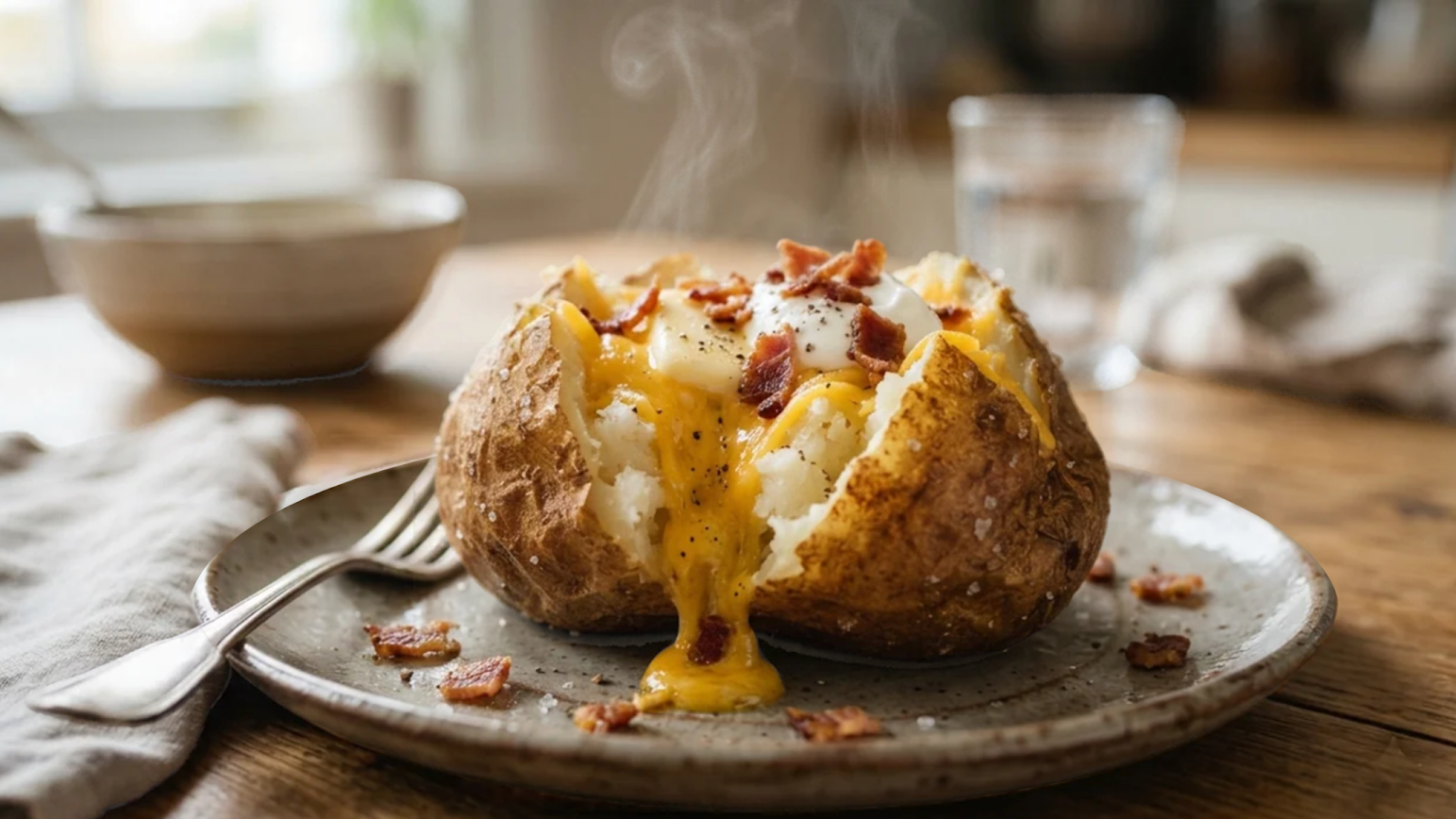
Baked potatoes are easy to prepare, require only a few ingredients and work well as both a side dish and a filling meal. The secret to getting them right is knowing how to bake potatoes in oven so the skin becomes crisp while the inside stays soft and fluffy. With the right potato variety, a little oil and the correct oven temperature, you can make delicious baked potatoes at home without complicated preparation.
Russet potatoes are particularly suitable because their starchy flesh becomes light and tender during baking. For a classic result, bake them uncovered at 400°F (200°C) for approximately 55–70 minutes, depending on their size.
How to Bake Potatoes in Oven
You can prepare oven-baked potatoes with a few basic ingredients. The important steps are washing and drying the potatoes, seasoning their skin and allowing enough time for them to cook evenly.
Ingredients You Need
For four medium-to-large baked potatoes, prepare:
- 4 Russet potatoes
- 1–2 tablespoons olive oil
- 1 teaspoon salt, or to taste
- Black pepper (optional)
- Butter for serving
- Sour cream, grated cheese or chopped chives (optional)
Step-by-Step Instructions for Baking Potatoes
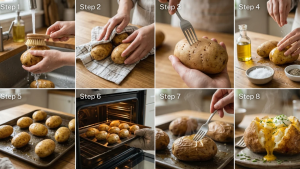
How to bake potatoes in oven for crisp, well-seasoned skin and a soft, fluffy centre. Follow these simple steps for consistent results every time.
1. Choose and wash the potatoes
Choose medium or large Russet potatoes of similar size so they finish cooking at roughly the same time. Rinse them under running water and scrub the skin with a vegetable brush to remove dirt.
2. Dry the potatoes thoroughly
Pat each potato dry with a clean kitchen towel or paper towel. Removing surface moisture helps the oil coat the skin evenly and allows it to crisp up in the oven.
3. Pierce the skin with a fork
Prick each potato several times with a fork, spreading the holes around its surface. This gives steam a way to escape as the potato cooks.
4. Coat with oil and season
Rub a thin layer of olive oil over each potato, making sure the skin is lightly coated. Sprinkle salt over the surface and add black pepper if desired. The oil helps the skin brown, while salt adds flavour and texture.
5. Arrange the potatoes for baking
Place the potatoes directly on the oven rack or on a baking sheet. Keep some space between them so hot air can circulate. Leave them uncovered if you want crisp skin, as wrapping them in aluminium foil traps moisture and makes the skin softer.
6. Bake until tender
Preheat the oven to 400°F (200°C). Place the potatoes inside and bake for approximately 55–70 minutes. Smaller potatoes may cook sooner, while larger ones may need additional time.
7. Check whether they are fully cooked
Insert a fork or thin knife into the centre of the largest potato. It should pass through easily without much resistance. If the middle still feels firm, return the potatoes to the oven for another 5–10 minutes before checking again.
8. Cut, fluff and serve
Remove the potatoes from the oven and let them rest briefly. Make a lengthwise cut across the top, gently squeeze the ends to open the potato, and fluff the inside with a fork. Finish with butter, sour cream, grated cheese, chives or your preferred toppings.
What is the Best Temperature to Bake Potatoes?
The best temperature for baking potatoes depends on how quickly you want them to cook and how crisp you prefer the skin. For most home recipes, 400°F (200°C) is a reliable choice. It allows the inside to become tender while the outside develops a nicely browned texture.
You can also use 350°F, 375°F or 425°F. Lower temperatures require more cooking time, while higher heat helps the skin brown faster.
- 350°F (175°C): Potatoes take approximately 75–90 minutes. This setting works when you have enough time and prefer slower cooking.
- 375°F (190°C): Expect around 60–75 minutes. It offers a middle ground between slower baking and higher-temperature cooking.
- 400°F (200°C): Most medium-to-large potatoes take 55–70 minutes. This is a good option for crisp skin and a fluffy centre.
- 425°F (220°C): Potatoes generally take 45–60 minutes. Choose this temperature if you want crispier skin and a shorter cooking time.
For a classic oven-baked potato, 400°F is a practical starting point. However, cooking time will vary with potato size, so always check the centre with a fork before serving.
How Long Does It Take to Bake Potatoes in the Oven?
Whole potatoes usually take 45–90 minutes to bake, depending on their size and the oven temperature. Smaller potatoes cook faster, while large Russet potatoes need more time for heat to reach the centre.
If you are preparing baked potatoes at 400°F (200°C), allow approximately 55–70 minutes for medium-to-large potatoes. Avoid relying on cooking time alone, as potatoes of the same variety can still differ in size and thickness.
Baked Potato Cooking Time Chart
Use this chart as a general guide when preparing whole potatoes:
| Oven temperature | Approximate baking time |
| 350°F (175°C) | 75–90 minutes |
| 375°F (190°C) | 60–75 minutes |
| 400°F (200°C) | 55–70 minutes |
| 425°F (220°C) | 45–60 minutes |
These timings are estimates for medium-to-large potatoes. If you are baking several potatoes together, arrange them with enough space for hot air to circulate.
To check whether a potato is ready, insert a fork or thin knife into its thickest part. It should pass through easily without meeting resistance. You can also use a food thermometer; an internal temperature of approximately 205–210°F (96–99°C) is a useful target for a soft interior.
If the centre is still firm, return the potato to the oven for another 5–10 minutes and check again. The skin may look completely cooked before the inside is ready, so always test the centre before serving.
Which Potatoes Are Best for Baking?
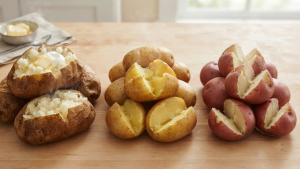
The potato variety you choose affects the texture of your baked potato. Some varieties have a high starch content and produce a light, fluffy centre, while others retain a firmer texture after cooking.
Russet Potatoes: Russets are the best choice for traditional oven-baked potatoes. They contain more starch and less moisture than many other varieties. Their thick skin becomes crisp during baking, while the inside turns soft and fluffy. Their large size also makes them suitable for generous toppings such as butter, cheese and sour cream.
Yukon Gold Potatoes: These potatoes have a naturally buttery flavour and a creamy interior. They contain less starch than Russets, so the flesh is denser rather than fluffy. Choose Yukon Gold if you prefer a smooth, slightly firm centre.
Red Potatoes: Red potatoes have thin skin and firm flesh. They hold their shape well during cooking, making them suitable if you prefer a less fluffy texture. Since they are usually smaller, they may also cook faster than large Russets.
For a classic baked potato with crispy skin and a soft centre, choose large Russet potatoes. Yukon Gold and red potatoes are good alternatives when you prefer a creamier or firmer texture.
Should You Wrap Potatoes in Foil Before Baking?
You do not need to wrap potatoes in aluminium foil before baking. In fact, baking them uncovered is better if you want crisp skin and a fluffy centre.
Foil traps steam around the potatoes, making the skin softer rather than crisp. The inside can still become tender, but the texture will be closer to a steamed potato.
For crispy oven-baked potatoes, follow these simple steps:
- Wash the potatoes and dry them completely.
- Pierce each potato several times with a fork.
- Rub a thin layer of olive oil over the skin.
- Sprinkle salt evenly over the outside.
- Place the potatoes directly on the oven rack or on an uncovered baking sheet.
If you prefer soft skin, you can wrap the potatoes individually in foil before baking. However, foil is not necessary for cooking them properly.
For the best crispy baked potato, skip the foil. Leaving the potatoes uncovered allows moisture to escape and helps the skin brown during cooking.
Best Toppings for Baked Potatoes
A freshly baked potato tastes good with simple seasoning, but adding the right toppings can turn it into a filling meal. Once you cut it open and fluff the soft centre, add butter, cheese, vegetables or protein according to your preference.
- Butter, Salt and Black Pepper: Add a small amount of butter to the hot potato and let it melt into the flesh. Finish with salt and freshly ground black pepper for a simple, flavourful serving.
- Sour Cream and Chives: A spoonful of sour cream with chopped chives adds a creamy texture and mild onion flavour. This combination works particularly well with crispy potato skin.
- Cheese and Corn: Add grated cheddar or mozzarella with sweet corn. The heat from the potato helps melt the cheese, while the corn adds a little sweetness.
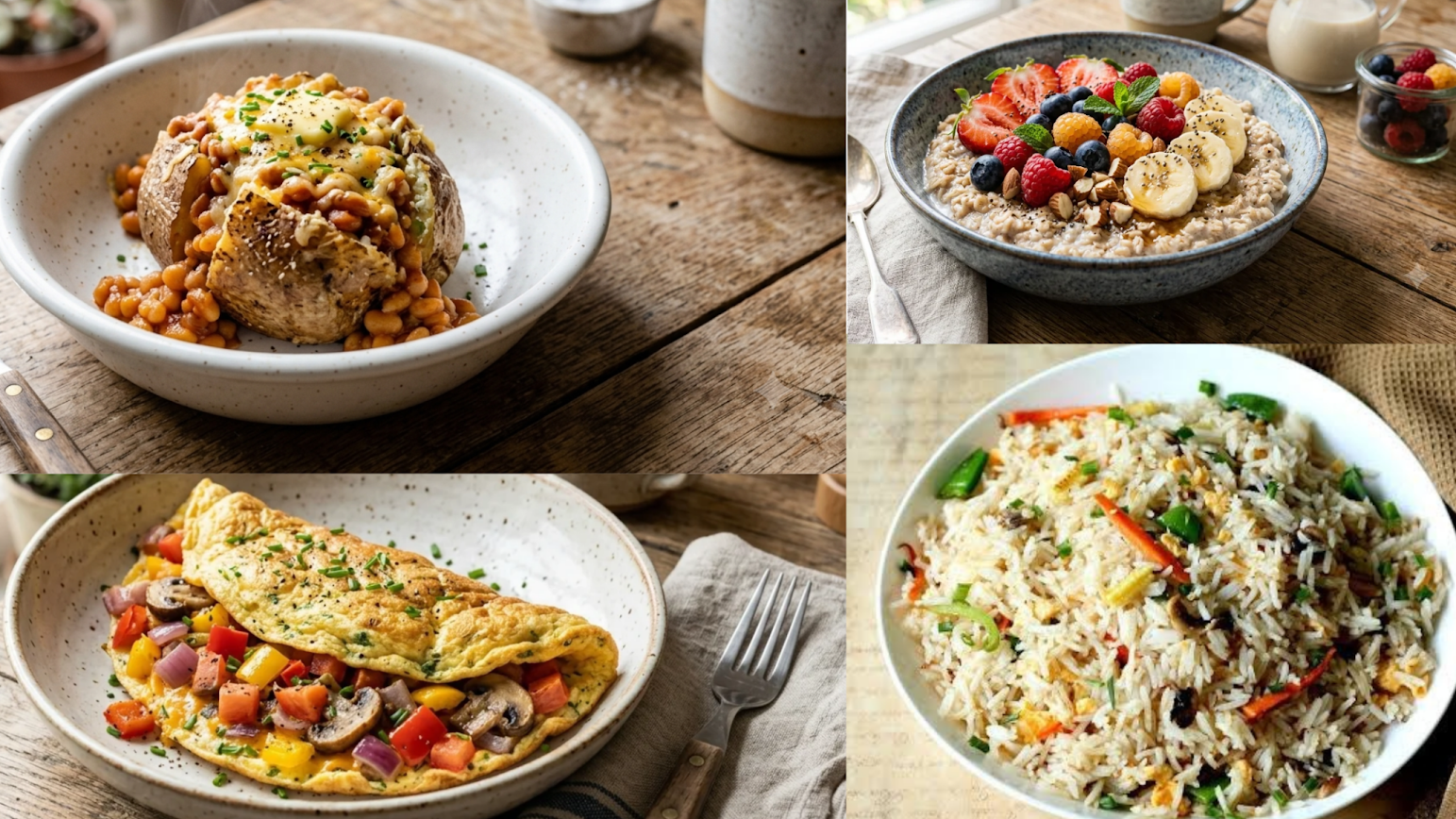
- Beans and Vegetables: Baked beans, sautéed mushrooms, broccoli and bell peppers make good toppings when you want a more filling meal. Season the vegetables before adding them.
- Chicken or Paneer: Shredded cooked chicken, grilled chicken pieces or spiced paneer can turn a baked potato into a satisfying lunch or dinner.
- Indian-Style Toppings: For a different flavour, try paneer bhurji, spiced chickpeas, chopped onions, coriander leaves or green chutney. A little chaat masala and lemon juice can also add a tangy finish.
You can combine two or three toppings, depending on your taste. However, avoid adding too much liquid if you want the potato skin to remain crisp.
How to Store and Reheat Baked Potatoes
If you have leftover baked potatoes, store them properly to maintain their quality and keep them safe to eat. Allow them to cool slightly and refrigerate them within two hours of cooking. Remove any aluminium foil and place the potatoes in an airtight container.
Cooked potatoes can generally be kept in the refrigerator for 3–4 days. Avoid leaving them at room temperature for long periods.
Reheating in the Oven
Preheat the oven to 350°F (175°C). Place the refrigerated potatoes on a baking sheet and heat for approximately 15–20 minutes, depending on their size. Leave them uncovered if you want the skin to become crisp again.
Reheating in the Microwave
Place a potato on a microwave-safe plate and heat for 1–2 minutes. Turn it halfway through and continue heating in short intervals until the centre is hot. The skin may become softer, so use an oven or air fryer briefly afterwards if you prefer a crisp finish.
Freezing Baked Potatoes
You can freeze plain baked potatoes individually in airtight freezer-safe packaging. However, freezing may change their texture, making the inside slightly grainy or watery after thawing. For better results, add butter, cheese and other toppings after reheating.
Wrapping Up
Learning how to bake potatoes in oven comes down to choosing the right variety, preparing the skin properly and using the correct temperature. Russet potatoes are ideal for a fluffy centre and crispy skin. Bake them uncovered at 400°F (200°C) for approximately 55–70 minutes, adjusting the time according to their size. Check the centre with a fork before serving and add your favourite toppings for a satisfying meal or side dish.
Frequently Asked Questions (FAQs)
Q1. How long does it take to bake a potato at 400°F?
A medium-to-large whole potato generally takes 55–70 minutes at 400°F (200°C). Smaller potatoes may cook faster, while extra-large ones can require additional time. Check the centre with a fork before serving.
Q2. Is it better to bake potatoes with or without foil?
Baking potatoes without foil is better if you want crispy skin. Foil traps steam, making the skin softer. For a crisp outside and fluffy centre, coat the potatoes with oil and salt and bake them uncovered.
Q3. Should you poke holes in potatoes before baking?
Yes. Pierce each potato several times with a fork before baking. This allows steam to escape during cooking.
Q4. Do you need to boil potatoes before baking them?
No. Whole potatoes do not need to be boiled first. Simply wash, dry, season and place them directly in a preheated oven.
Q5. Why are my baked potatoes still hard in the middle?
The potatoes may need more cooking time, particularly if they are large. Return them to the oven for another 5–10 minutes and check the centre again with a fork.